Summary of Original Article, The Woman Who Claimed She Was Raised by Giants
In an old cemetery in Rochester, New York, there is said to be a weather-worn gravestone that offers more questions than answers. Most visitors would never stop at it. The marker is aged, softened by rain, snow, and more than a century of silence. Its inscription is simple: Katherine Wells, 1814–1887.
Beneath the name and dates, one strange sentence remains:
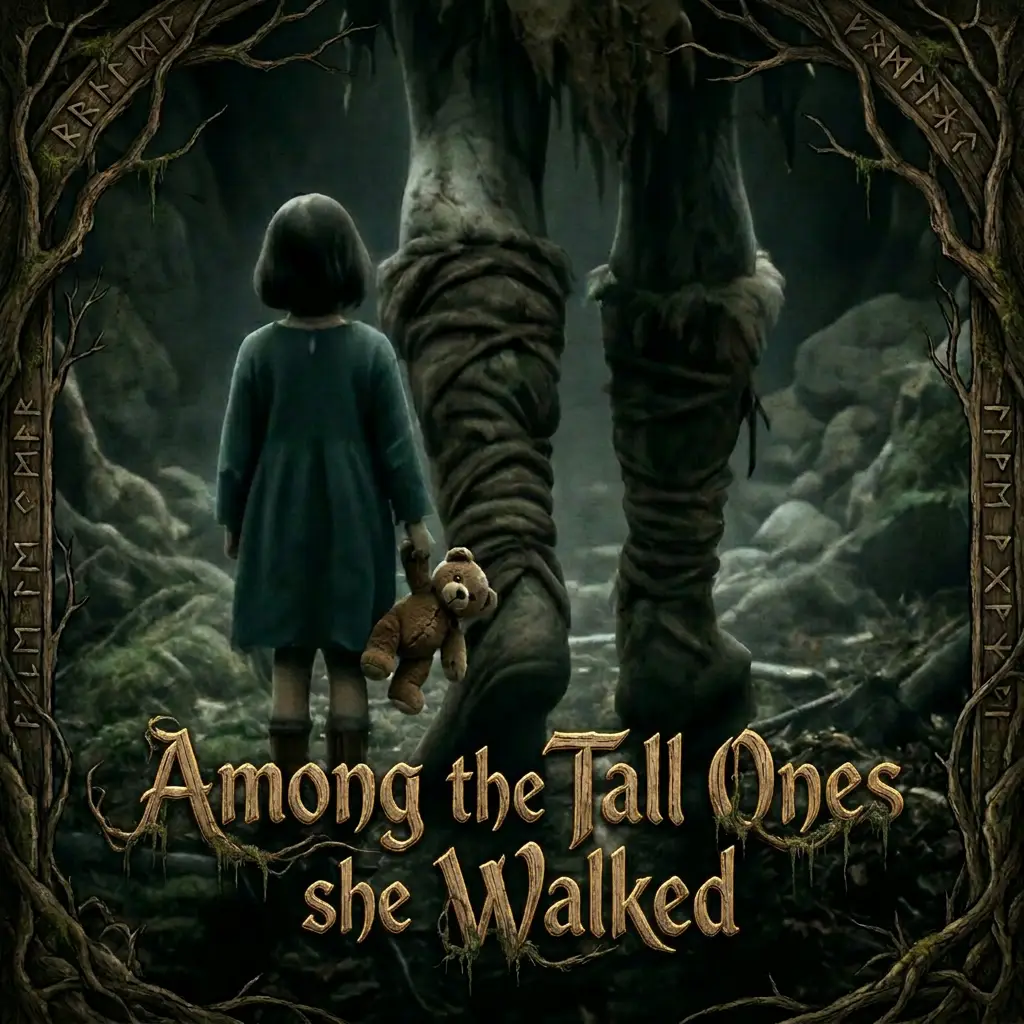
“She who walked among the tall ones.”
No family name explains it. No public record gives it context. It is the kind of phrase that feels too specific to be decorative and too cryptic to be accidental. For those who have followed the story of Katherine Wells, those six words are the doorway into one of the strangest legends ever connected to upstate New York.
A Quiet Death in Rochester
Katherine died at the age of 73 in a Rochester boarding house. By all accounts, she had lived quietly. She kept to herself, paid her rent on time, avoided church socials, and formed few attachments. Other residents knew almost nothing about her. She had no known relatives, no visitors, and no clear history before her arrival in the city in 1879.
Her landlady later claimed that Katherine became feverish in the days before her death. She spoke in unfamiliar words, marked the walls with charcoal symbols, and repeatedly insisted that she needed to tell someone “before it was too late.” A local physician, Dr. Samuel Thornton, was called to attend to her.
He could not save her. According to the story, he did hear her final confession.
The Confession of Katherine Wells
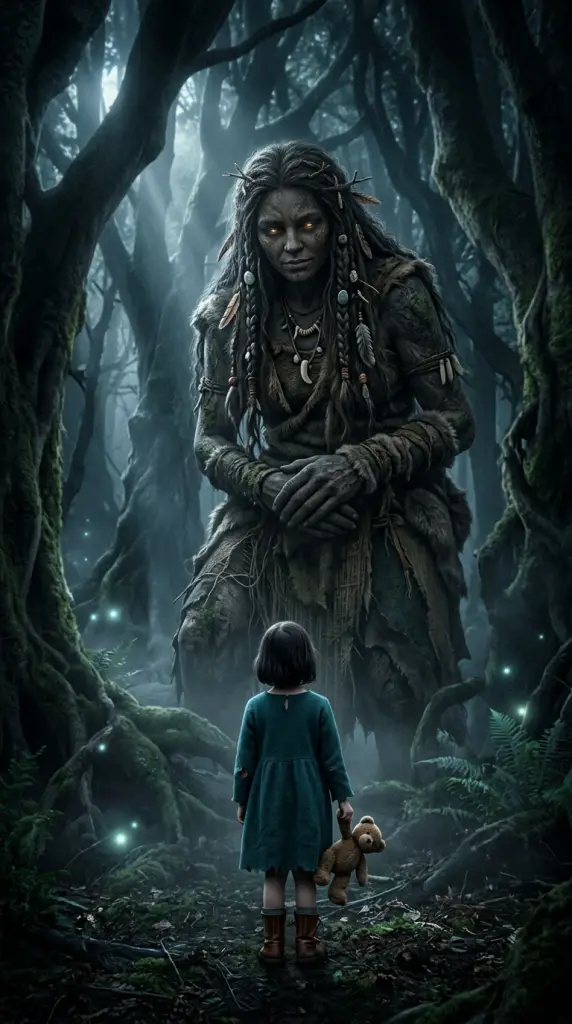
Katherine Wells allegedly told him that her childhood had not been spent among ordinary people. She said she had been raised by beings far taller than humans, beings who lived in hidden places, built into mountainsides and deep forests, and carried knowledge that seemed centuries ahead of the world she later returned to.
She called them the tall ones.
Her claim was extraordinary. She described them as standing between 12 and 18 feet tall, humanlike but distinct, powerful but gentle, and organized into small hidden communities across parts of what is now Pennsylvania, New York, Ohio, and West Virginia. She said they found her as a lost child wandering alone in the wilderness after some unknown disaster separated her from her human family.
At the time, she believed she was four or five years old.
The giants, she said, took her in.
For nearly fifteen years, they fed her, taught her, protected her, and raised her as one of their own. Then, when she reached young adulthood, they returned her to human society with money, clothing, and one command: never tell the world about them.
For most of her life, Katherine appears to have obeyed.
The Locked Trunk
That silence is part of what made Dr. Thornton take her story seriously. At first, he dismissed her words as the final confusion of a dying patient. Pneumonia, fever, and isolation could easily produce hallucinations. A doctor in the late 1800s would have had every reason to explain the matter that way and move on.
Then he opened her trunk.
After Katherine’s death, Dr. Thornton gained access to a collection of journals she had kept locked away for years. Inside, he reportedly found thousands of pages filled with sketches, symbols, measurements, maps, descriptions of buildings, lessons in mathematics, astronomical notes, and long narrative passages describing her life among the giants.
The journals did not read like scattered madness. They were organized. Their details remained consistent. The same places, customs, names, physical descriptions, and lessons appeared across entries written years apart.
Strange Knowledge in the Journals
Katherine described homes built partly underground for concealment and temperature control. She wrote about carefully engineered stone structures, hidden entrances, and passageways designed to disappear into the landscape. She sketched tools, clothing, baskets, plant fibers, ceremonial objects, and large pulley systems used to move heavy stone.
Her accounts of engineering were the hardest for Thornton to ignore. She described principles of weight distribution, leverage, stone cutting, and structural balance that were far beyond what most untrained people of her era would have understood. According to the legend, some of her diagrams anticipated techniques that engineers would later recognize as practical and sophisticated.
She also wrote about astronomy with unusual precision. The giants, she claimed, taught her to track stars, predict seasonal changes, understand alignments, and use the sky for navigation. She connected certain celestial markers to earthworks and ancient stone sites across North America, arguing that many structures later assigned to known cultures were older than scholars believed.
A Controversial Claim
That part of the story is also where caution is needed. Claims that ancient monuments were built by some lost non-Indigenous race have often been used to diminish the real achievements of Native American civilizations. Katherine’s account, as the story presents it, does not erase Indigenous people entirely, but it does challenge accepted history in ways that are controversial and unsupported by mainstream archaeology.
In her telling, the giants were ancient inhabitants who sometimes taught, traded with, and lived uneasily alongside smaller human populations. Their relationship with humans was described as complicated rather than purely hostile. Cooperation existed. So did fear. Over time, the giants saw the human population expanding while their own numbers declined.
Katherine believed they chose disappearance over war.
She wrote that the giants hid or destroyed their dead to prevent future humans from proving they had existed. Their elders feared that discovery would bring violence, exploitation, or desecration. They wanted to fade into myth, becoming stories whispered around fires instead of trophies in museums.
The Old Reports of Giant Skeletons
That detail caught Dr. Thornton’s attention because the 1800s were filled with newspaper reports about unusually large skeletons being found across the United States. Some accounts described remains of people seven, eight, nine, or even ten feet tall. A few sensational reports claimed even larger discoveries. Many of these stories appeared in local papers, and some reached major publications.
The accepted explanation is simple: exaggeration, mismeasurement, hoaxes, mistaken identifications, or sensational journalism. The 19th century was full of newspaper oddities, and many supposed discoveries collapsed under scrutiny.
Those who believe Katherine’s account see those reports differently. To them, the old articles are fragments of a larger pattern: discoveries made, bones removed, institutions named, and then records disappearing. Katherine allegedly gave specific locations where giant remains or traces of their settlements might be found, including burial mounds in Ohio, caves in Pennsylvania and West Virginia, and several remote sites in New York.
Thornton spent years investigating some of those places. His own journals reportedly describe disturbed earth, old excavation marks, local rumors, and family stories about large bones being taken away by men claiming to represent museums or universities. He found suggestions, but never proof.
That was the problem that followed him for the rest of his life.
Katherine’s story was too detailed to dismiss casually and too impossible to accept easily.
How Katherine Described the Tall Ones
Her journals described the giants as intelligent, quiet, and deeply aware that their civilization was ending. They lived in small groups, rarely more than a few dozen together. They cultivated plants, used natural materials with extraordinary skill, and built in ways that left little trace. They did not rely heavily on metal, at least not in the communities Katherine knew. Their mastery was stone, wood, fiber, astronomy, memory, and concealment.
She said they had a written language.
Page after page of her journals reportedly contained strange symbols unlike any known alphabet. Some who later examined copies or descriptions of these symbols claimed they showed patterns that resembled a real writing system. Others believed they were meaningless marks created by an isolated woman with an active imagination.
Katherine herself wrote that she had been forbidden to leave behind a key. She could copy some symbols, but she would not provide a full translation system. The giants had allowed her to learn their language, she said, but they did not want humans reading the messages carved into hidden stones across the continent.
Warnings Carved in Stone
Still, she recorded fragments of what those inscriptions supposedly said. Some were warnings. Some were histories. Some marked disasters, floods, quakes, conflicts, or the deaths of entire settlements. One passage warned that a population can grow faster than its wisdom. Another mourned the loss of communities that had vanished long before Katherine was born.
In her journals, the giants were not monsters. They were not fairy-tale creatures or conquerors. They were a dwindling people carrying the weight of too much memory and too little future.
The Child They Saved
Katherine’s own place among them was unusual. She wrote that she never fully understood why they saved her. The giant woman who found her treated her with tenderness, feeding her and carrying her back to the hidden settlement. Others were wary at first. Over time, she became accepted, though always with the understanding that she was human and would one day have to return to humans.
When that day came, she resisted.
According to her account, the elders told her she could not remain. Their world was closing. Their people were disappearing. A human woman living among them would eventually draw danger to whatever remained of their communities.
They brought her near a settlement, gave her clothing, coins, and instructions for survival, then left her at the edge of human society.
She never saw them again.
The Gold, the Silence, and the Search
The gold and silver she carried helped her survive, but they also raised questions later. Katherine explained that the giants collected precious metals from streams and riverbeds over long periods. They had little personal use for gold, but they understood its value among humans. For someone like Katherine, it was a bridge back into the world.
She spent years trying to find her way back to them. She returned to the forests and hills where she believed their homes had been. She searched for entrances she once knew, landmarks she remembered, and hidden paths she had walked as a child.
Nothing remained.
Eventually, she accepted that they had either moved on or concealed themselves so completely that even she could no longer find them.
A Woman Out of Place
After that, Katherine lived as a wanderer. She supported herself quietly, sometimes tutoring children from wealthy families, sometimes using her mathematical knowledge to advise on investments or practical problems. She learned to hide what she knew. When people noticed how quickly she could calculate or how easily she understood engineering questions, she became cautious.
She wrote about pretending to struggle through problems she could solve instantly. She made deliberate mistakes. She concealed fluency in languages and ideas no one could explain.
Her loneliness runs through the story as strongly as the mystery does.
The woman in those journals was not only guarding a secret. She was grieving a lost childhood, a lost people, and a version of the world no one around her would believe.
Why Dr. Thornton Never Published It
Dr. Thornton never published Katherine’s journals while he was alive. That decision has fueled speculation ever since. Skeptics argue that he knew the material would ruin his reputation because it was obvious fantasy. Believers argue that he feared ridicule or pressure from institutions that had no interest in revisiting American prehistory.
A more human explanation may be the simplest: he did not know what to do with it.
His notes reportedly show a man caught between reason and doubt. He did not claim to have proven the existence of giants. He also refused to call Katherine a liar. Her knowledge troubled him. Her consistency troubled him. Her lack of motive troubled him most of all.
Katherine had not tried to become famous. She had not sold her story. She had not gathered followers or sought money. She lived quietly, wrote privately, and spoke only when death was near.
That does not make her story true. It does make it harder to explain as a simple hoax.
Her Final Words
The most haunting part of the account is not the giants themselves, but Katherine’s final emotion toward them. Her last words, as Thornton recorded them, were said to be gentle and full of regret.
They had been kind when she had no one. They had taught her when she had nothing. She had kept their secret as long as she could. She hoped it had been long enough.
Then she died.
Thornton paid for her burial and chose the inscription himself: “She who walked among the tall ones.”
Katherine had apparently requested that the stone acknowledge the truth without explaining it. Anyone who understood would understand. Everyone else would pass by, read the line, find it curious, and continue walking.
That may be exactly what happened.
A Mystery Left in Stone
Today, the story of Katherine Wells sits in the uneasy space between folklore, alternative history, and psychological mystery. Perhaps she really believed every word because she had lived it. Perhaps she built an elaborate inner world around childhood trauma. Perhaps her journals were a private mythology, a way of giving shape to abandonment, loneliness, and survival.
Or perhaps, as believers insist, she carried the last living memory of a people who chose silence over extinction in battle.
The evidence remains uncertain. The claims remain extraordinary. The accepted history of North America does not require giants to explain its ancient earthworks, monuments, or civilizations. Indigenous peoples built complex societies with their own engineering, astronomy, agriculture, and architecture, and that truth should not be diminished.
Still, legends endure because they leave one door slightly open.
Katherine Wells may have been a lonely woman with a powerful imagination. She may have been a witness to something history refuses to hold. Either way, her story survives because of one grave marker, one doctor’s notes, and a sentence that refuses to explain itself.
She who walked among the tall ones.
A question carved in stone.